Olivers
E-commerceA florist's online shop, rebuilt off a rented Shopify platform and onto infrastructure Olivers owns outright.
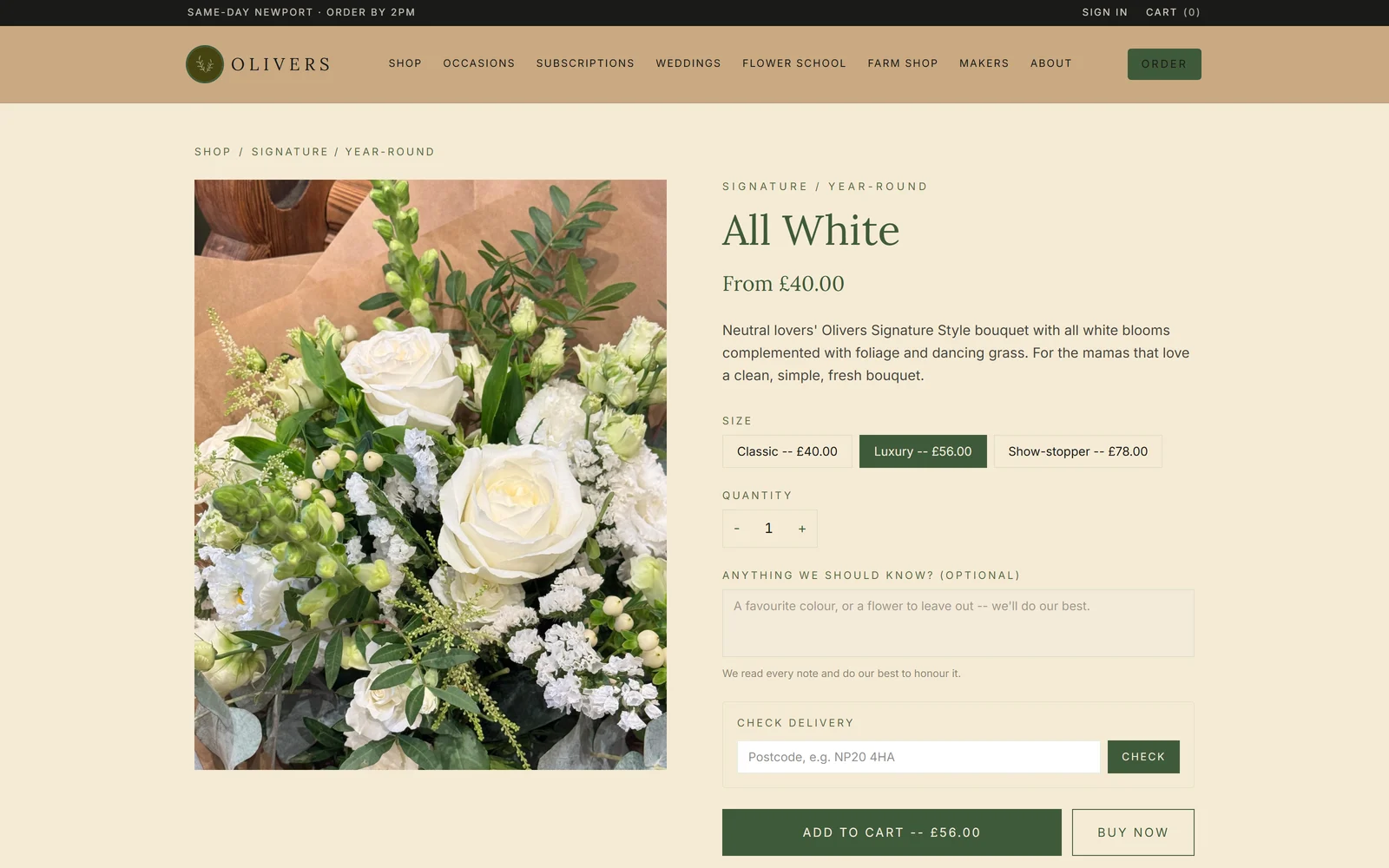
Olivers sells flowers online and takes bookings for weddings and workshops. A general-purpose platform like Shopify was never built to do both.
Each change to the range, delivery rules or booking pages went through a template not built for a florist, and the range changes with the season.
Same-day delivery around Newport is a postcode question with a cut-off. Weddings and workshops need their own records for dates, capacity and deposits.
A ground-up store rebuild (catalogue, bookings, weddings and workshops) on infrastructure Olivers owns outright.
Three delivery rails, each with its own cut-off and fee: same-day inside the Newport postcodes, next-day across South Wales, next-day to the rest of the UK. A postcode checker on the product page and in the cart answers while the customer is still choosing.
The server prices each line from its own table, ignores the price the page sent, recomputes delivery and the total, and mints the order reference. A total more than a penny off is refused, and only the server can create an order record.
Two things were left out on purpose. Olivers already takes card at the counter, so a card processor is wired in behind a switch, to be turned on when card-not-present demand pays for it. Recurring orders are a contact-to-arrange page: the usual subscription add-on would have tied the shop back to Shopify, and at launch the business arranges them in person.
An AI-assisted operations layer drives product and content changes end to end, so the shop can be updated without a developer on hand.
It runs named routines: new bouquet, price change, retirement, product go-live, workshop launch and marketing pack. Each carries the change through the catalogue, photography, printed pack, marketing and live site. A ledger tracks what each run still owes, survives a crash, and stays open until the checks pass.
The checks compare shop prices with the server's and quoted delivery fees with charged ones, confirm each product has an image, and test that the live product page renders and checkout completes. Payments, sign-in, security rules, legal pages, checkout and the canonical catalogue move only on a person's say-so.
What it actually looks like, running.
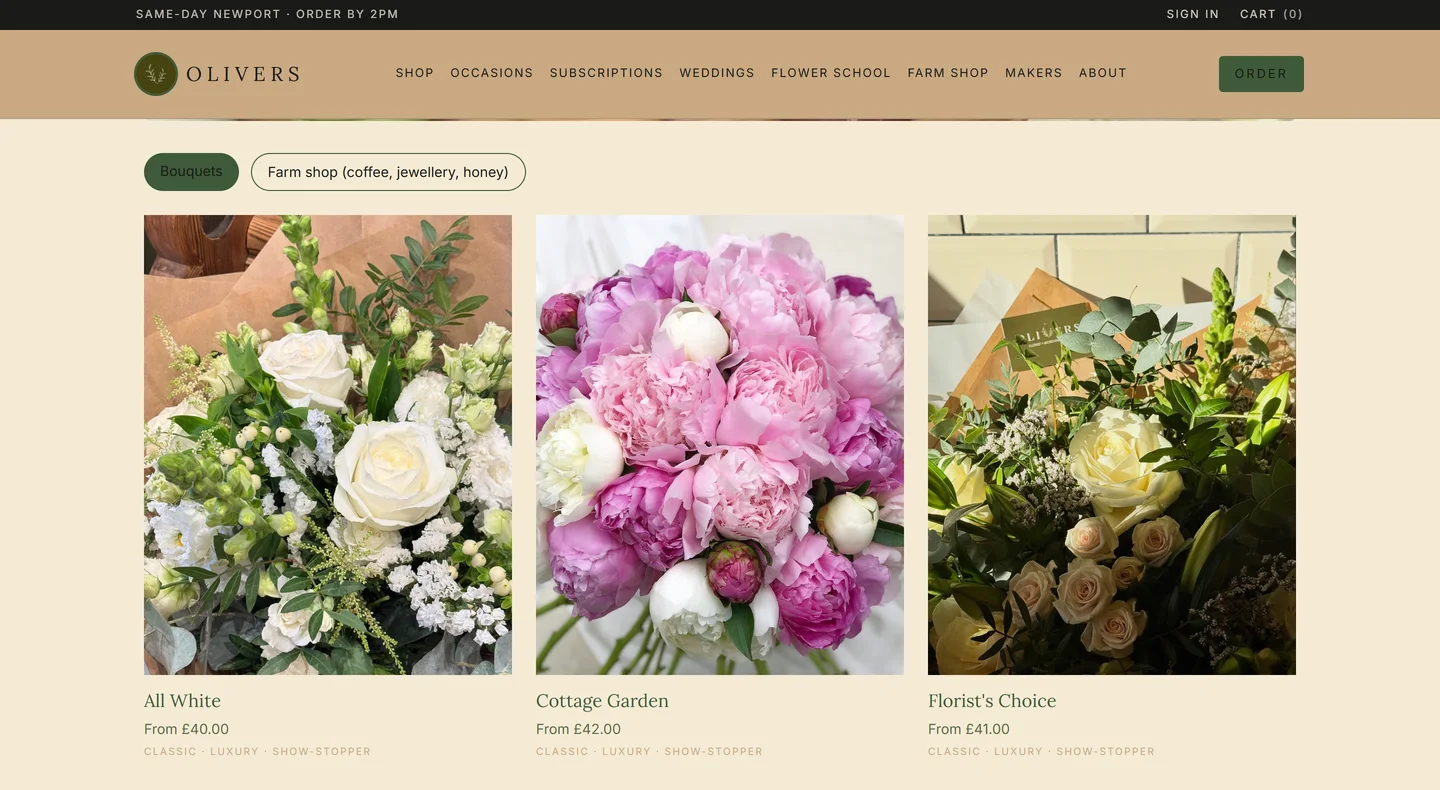
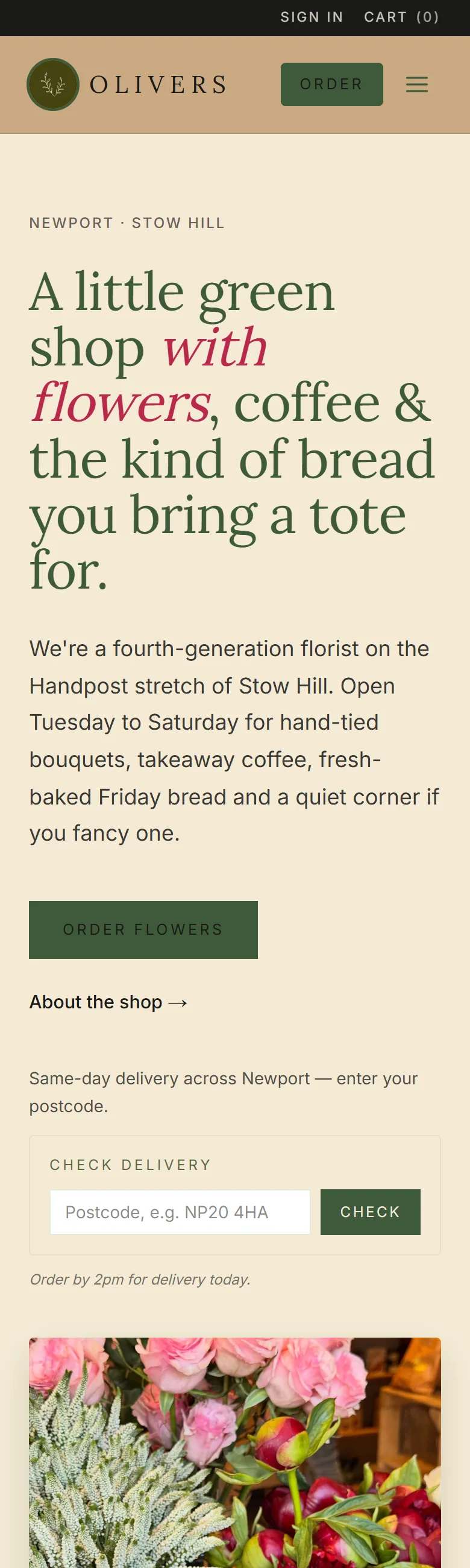
A small team runs the whole shop (catalogue, bookings and content) without a developer on hand, and can take on more without buying new software.
Seasonal changes cost less, because the routines carry each one through to the live site.
The shop sits on ground Olivers controls: a static storefront on a CDN, dynamic work on functions, and customer data in a UK region for residency and speed.
Take half an hour to see what an owned storefront could look like for your business.
No commitment and no fixed quote until it is scoped. If we go further, you own what we build.