Baby Crafts
Retail · D2CA personalised baby-clothing range, turned into an AI engine that puts a child's own name on the product, plus the web-studio that sells it.
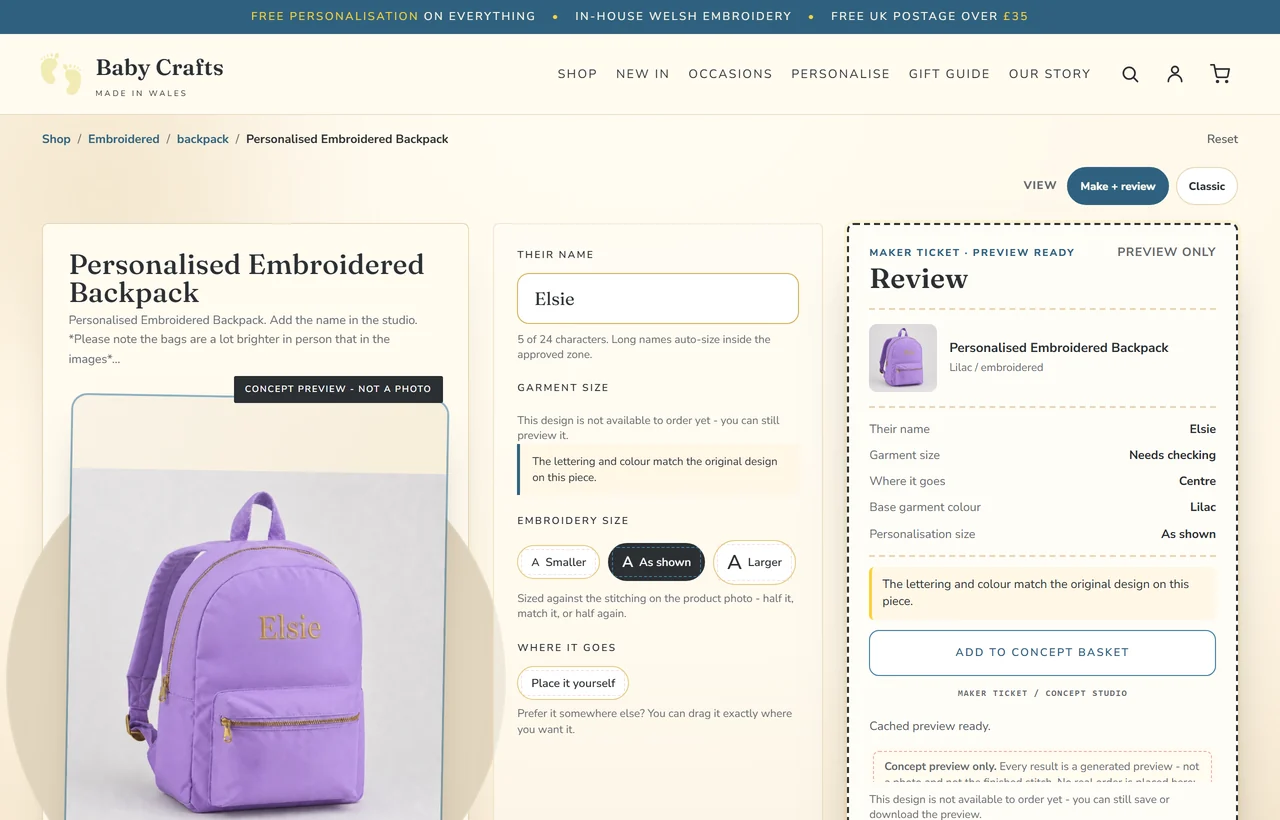
Baby Crafts UK sells handmade, personalised baby and children's clothing. Each order is a one-off: one name, one colour, one style.
Showing each customer their own choice on the real product is studio work a small brand can't staff by hand.
A drag-and-rotate canvas lets a name land outside the production zone. Rendering on page load spends money on people only browsing. And a children's brand needs safety checks a general image tool doesn't apply.
Three steps. Pick how it will be made, pick the exact piece from the real catalogue, then add a name or initials, thread colour, lettering style, a small motif and where it sits. The engine generates a preview of that exact product before anything is made.
The product owns placement, so the workshop can reproduce the preview. Each garment is calibrated once in an internal tool. The customer picks name, thread, lettering and motif, and position only where the garment has real production alternatives. The engine sets size, angle, how lettering follows a curve or fold, and which seams and straps to avoid.
Four modes. A garment with a known embroidery zone takes the name in that slot. A template photo with a sample name has it replaced in the same place and style. A blank tee gets generated artwork on preset placements. A personalisable product with no calibrated preview yet gets no preview: the page says so and points to the real product.
Garments that need special handling get a generated rule file: zones, allowed options, character limit and instructions to the model. A smocked babygrow's file asks for small, low-relief lettering, keeps the smocking rows and popper placket intact, and rules out a printed-ink or vinyl finish.
Around it, a full web-studio: storefront, catalogue, the personalisation flow, and a back office to qualify garments, review output and monitor the engine.
Built on the client's own range: 323 real products across 15 categories, 214 personalisable and 76 already with a calibrated blank.
Spend stays controlled. Nothing renders until the customer presses the button. Identical choices are served from a cache, the day is capped at 150 renders (40 of them artwork), requests are throttled, and the model key stays on the server as a secret.
Three safety layers for a children's brand: a text gate before any money is spent, the model set to block at its lowest harm threshold, and a vision check on uploads and outputs before either is cached or shown. It fails closed: a check that can't answer refuses the image. A final readback compares the picture with what the customer asked for.
What it actually looks like, running.
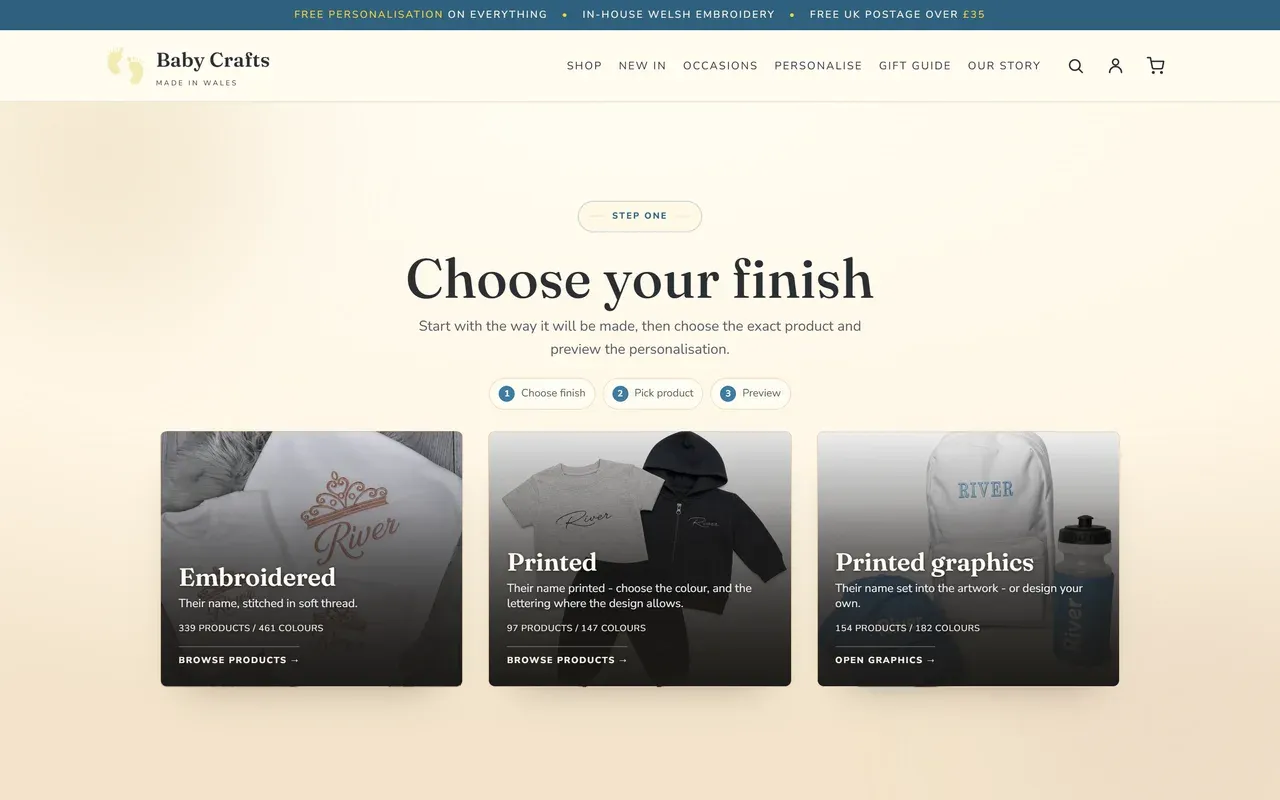
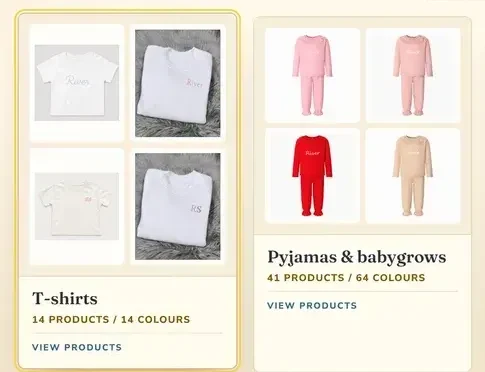
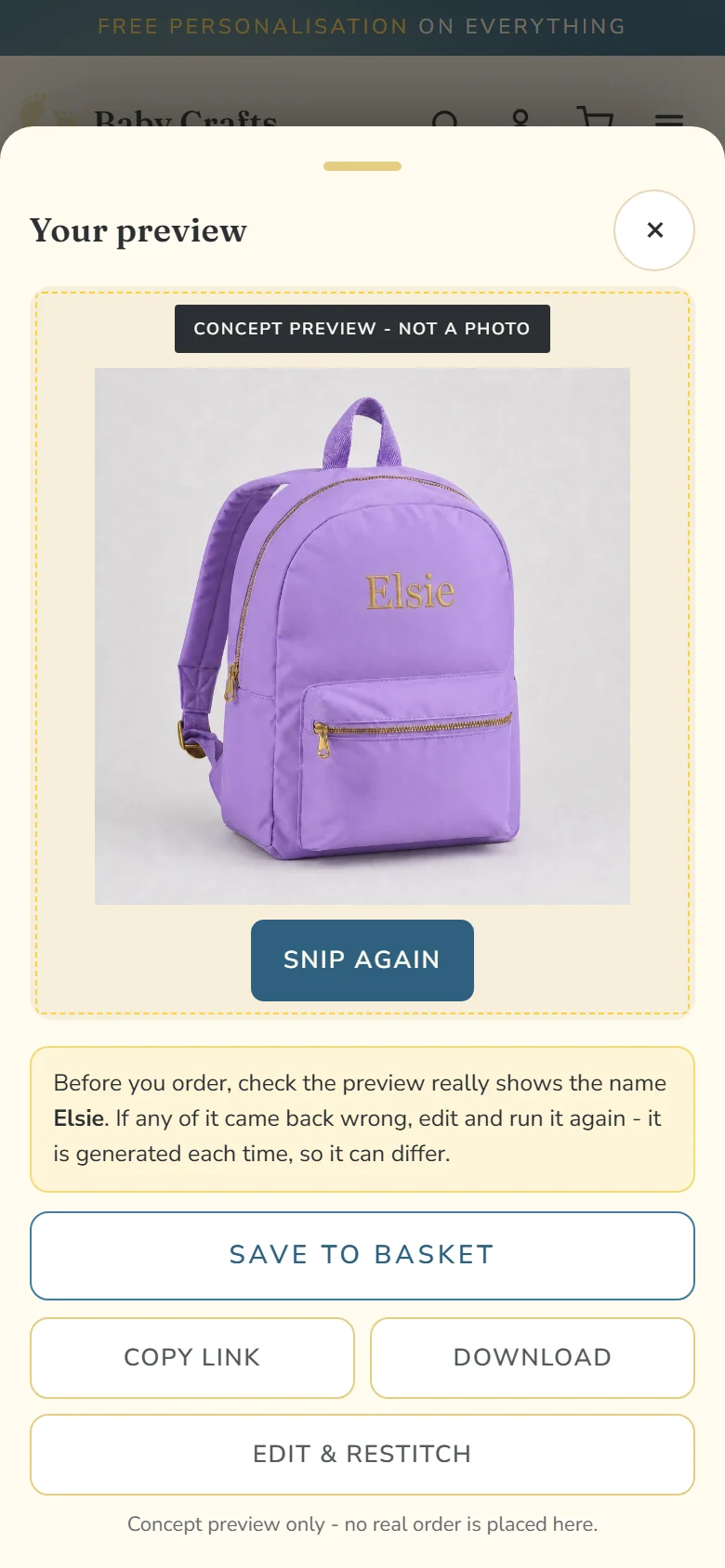
One range now generates its own personalised previews and marketing imagery on demand: studio work a big brand would staff a team for.
The product owns placement, so what the customer sees is what the workshop can stitch.
Running cost is capped. Repeat designs come from the cache, the day has a ceiling, and each result is labelled a concept preview.
Take half an hour to see what a personalisation engine could do for your business.
No commitment and no fixed quote until it is scoped. If we go further, you own what we build.