Turn an expert bottleneck into a self-serve product
A deterministic engine sets the numbers. AI varies the plan. Your expert approves it before the customer sees it.
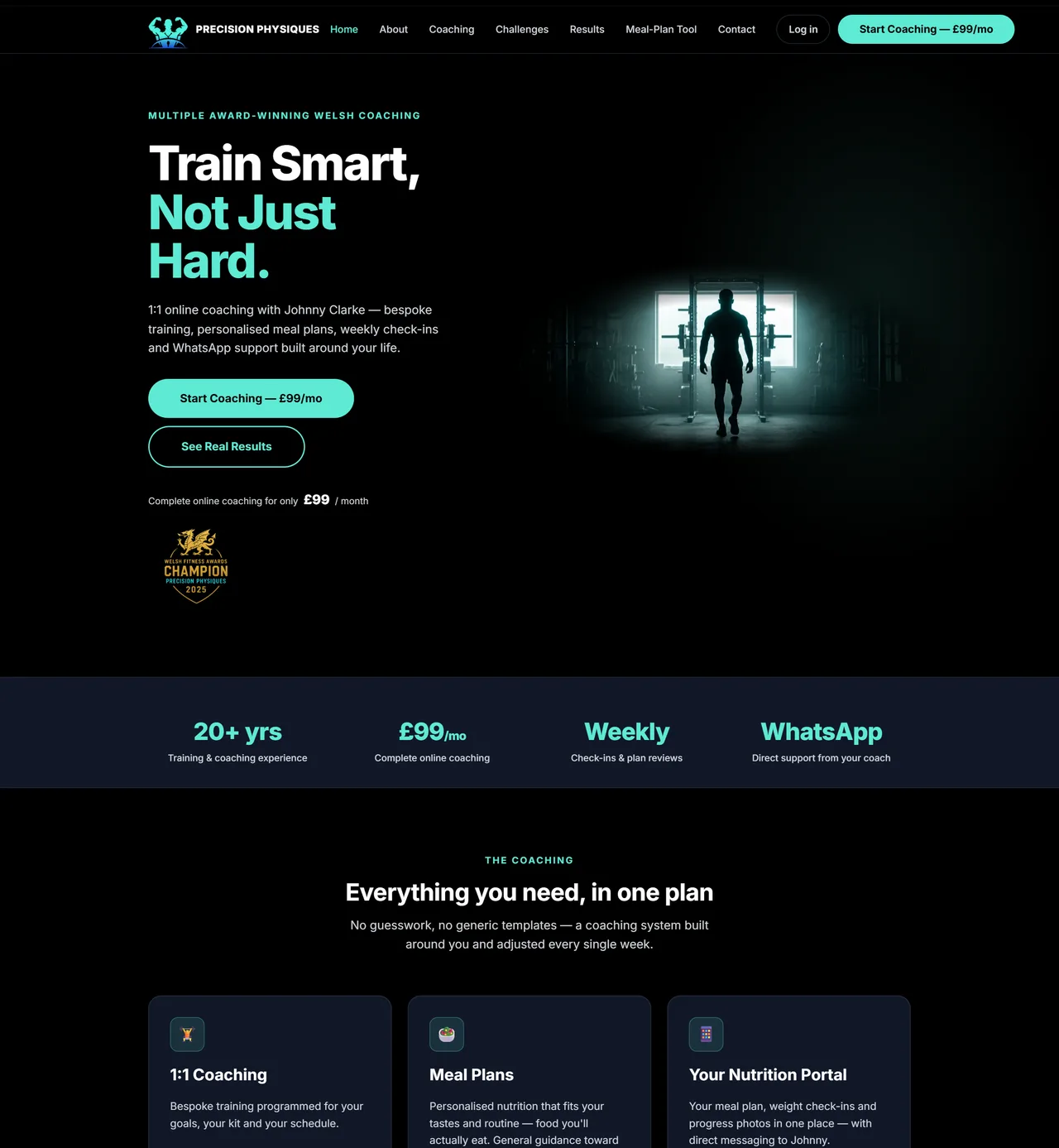
Precision Physiques is built on this: deployed, coach-exercised, before its first client.
A Mifflin-St Jeor macro engine sets each client's numbers. Gemini varies a five-day meal plan around them. The coach approves each plan before the client gets it as a branded PDF.
Tell us which job eats your week. In half an hour you will know whether an agent is worth building for it.
No commitment and no fixed quote until it is scoped. If we go further, you own what we build.
Targets set in code. The model works inside them.
- Engine
Deterministic core
The maths that must be right runs in ordinary code.
- Variation
AI-generated plan
The model varies the output inside that frame, with a deterministic fallback.
- Sign-off
Expert approves
Your expert reviews before the customer sees it.
- Delivery
Async + branded PDF
A background job that lands as a document the customer keeps.
Where else this pattern fits
Risk-profile intake → deterministic allocation model → adviser-reviewed recommendation. No spreadsheet per client.
Job inputs → a rules engine sizes and prices the spec → an expert signs off.
Hand-building personalised outputs today? This turns them into software, with you still signing off.
Does the AI just make things up?
No. A deterministic engine sets the numbers that must be right. The AI varies food and portions inside a frame the engine checks, with a deterministic fallback if it fails.
Where does the expert fit in?
In the loop. The system drafts; the qualified person approves before the customer sees it, as built at Precision Physiques.
What if generation is slow?
It runs as a background job, so nobody waits on a spinner. In the live build this replaced a ~58-second wait.
Tell us which job eats your week. In half an hour you will know whether an agent is worth building for it.
No commitment and no fixed quote until it is scoped. If we go further, you own what we build.