Agentic Tools
Internal AI systems · 5 productsFive systems built to run one consultancy — an AI-session console, an artifact library, a WhatsApp bridge, a social-publishing engine and a dictation overlay. The same discipline sold to clients, proven first on the business that built it.
Running several AI coding sessions at once meant several terminal windows and no single view of what each was doing or waiting on.
Every project throws off finished output — renders, reports, PDFs, mockups — and without one searchable home for it, past work is a folder nobody remembers.
WhatsApp, social posting and voice input are all channels worth putting an AI in front of — but only if sends, publishes and inputs stay under a person's control, not the AI's own initiative.
Getting an AI to draft a message is easy and has been for a while. The hard part is the second half — deciding what a person still has to say yes to, and building that answer into the code rather than into a habit. Every one of these five is really an answer to that question.
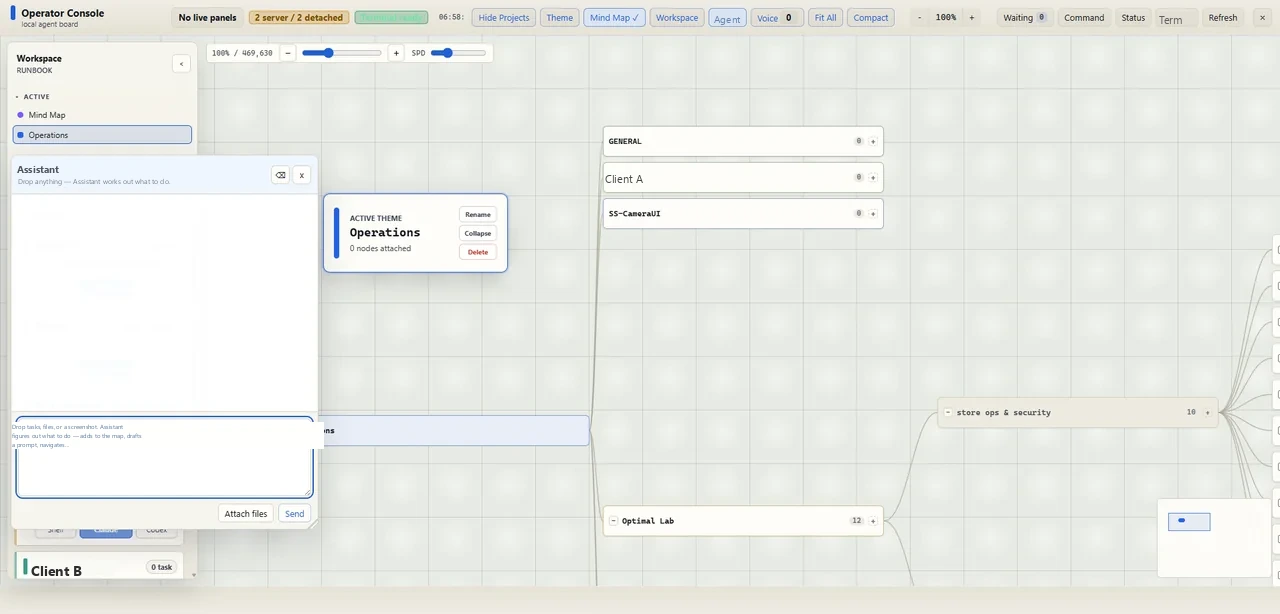
Operator Console — a web console that runs and watches several live Claude and Codex coding sessions from one browser tab, each in its own resizable terminal window with its own status and a task list the agent and the operator both write to. The same product travels to the phone as a native iPhone companion app.
Two rules shape it. The console never touches a project's source — the one thing it writes there is the shared task list, by design. And the terminals it drives are hosted outside the console's own process, so reloading the thing you are looking at does not kill the sessions you are watching. It ships with no build step and no framework at all — a console you cannot start because its bundler broke is not a console. A change to it is only finished once the running process has been proven to have loaded it, which is a different claim from the tests passing.
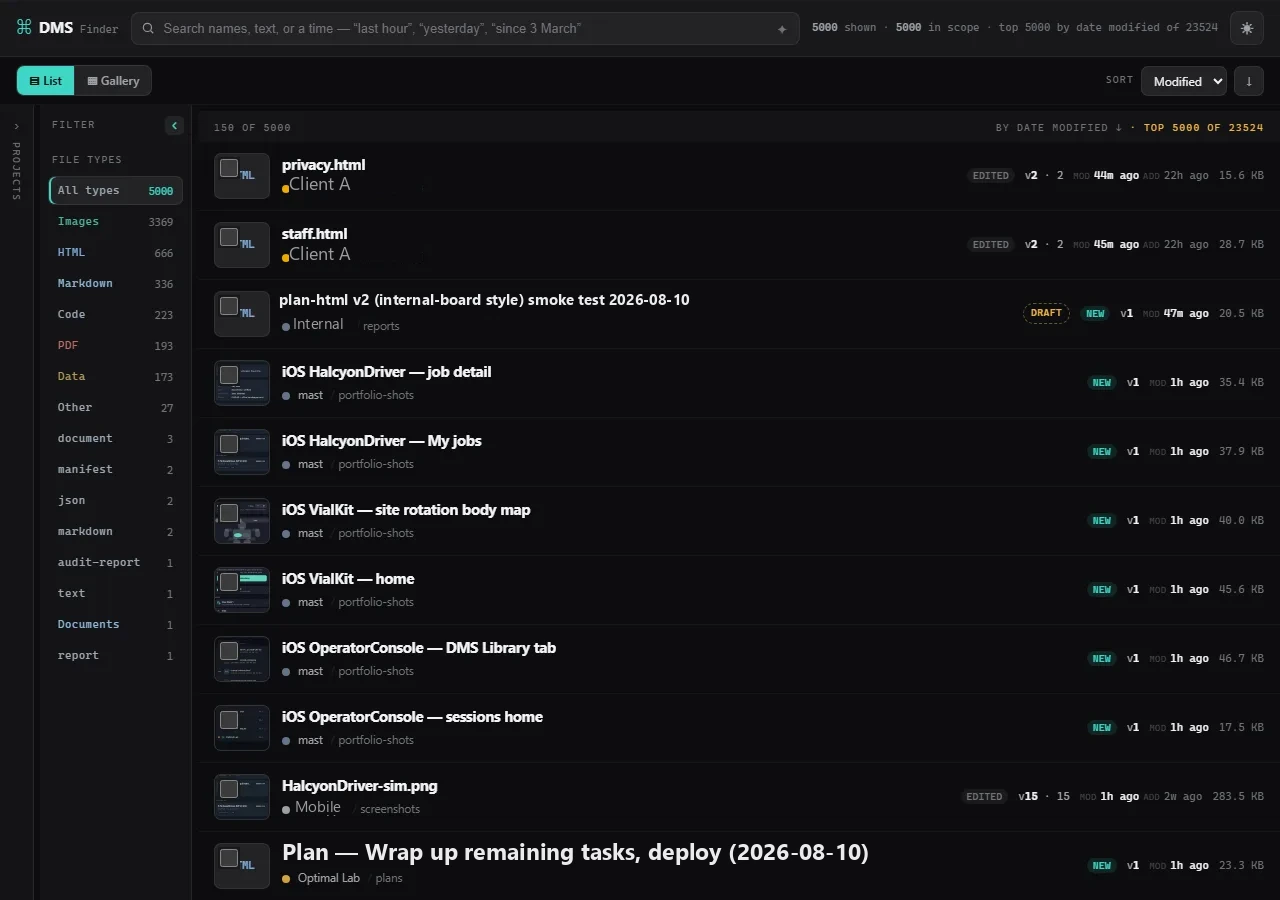
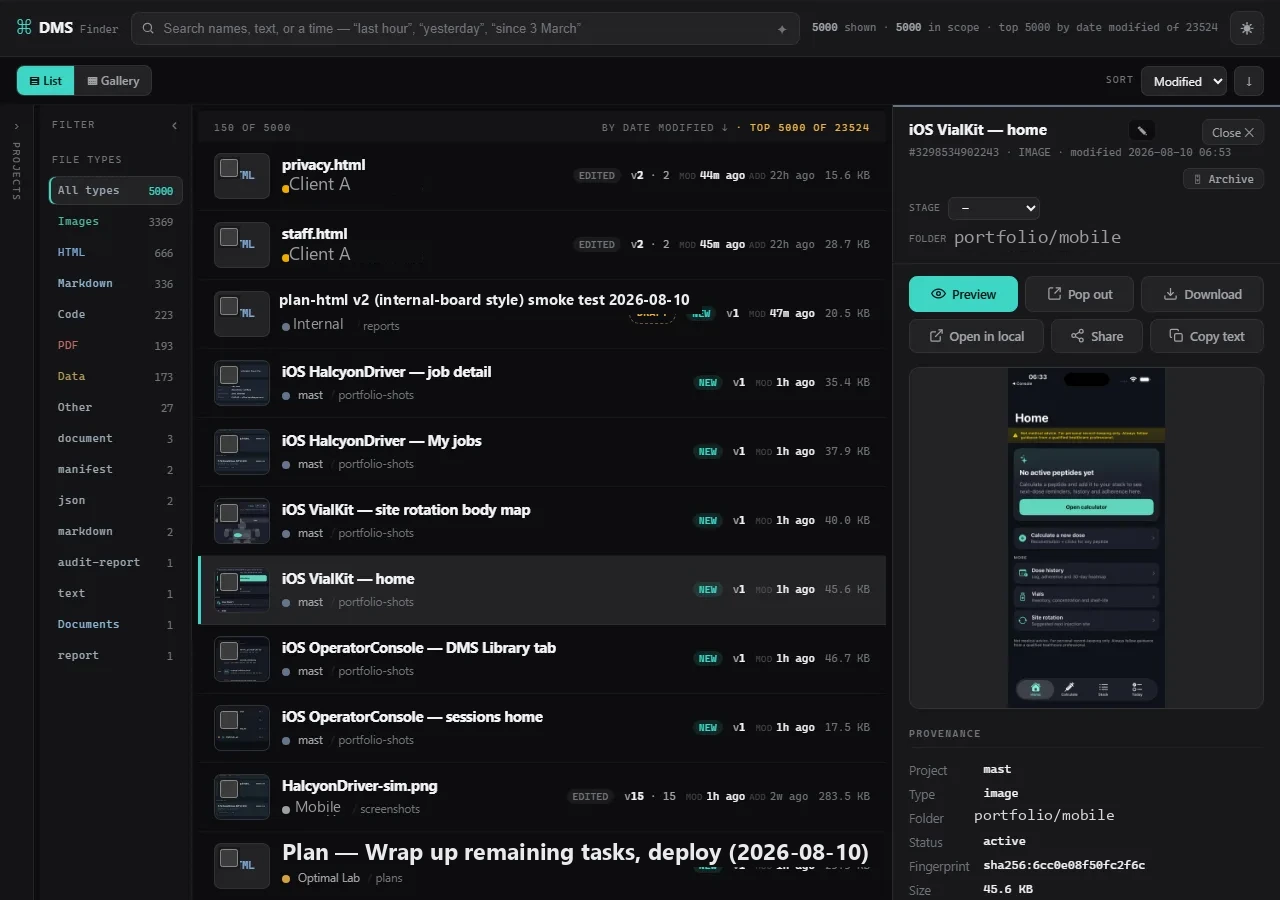
DMS — a content-addressed library that finished output is filed into, with a watcher catching what nobody filed: full-text search, version rollback, and tagged provenance on everything filed at source. Over 23,600 artifacts across 35,700 versions are stored and searchable today, in daily use on the projects that are actively building.
Capture is deliberately doubled up. Anything produced can be filed explicitly, with a title, tags and a record of what it was made for and why — and a watcher picks up whatever nobody filed, because a library that depends on remembering to use it is a library with holes. Re-filing the same thing with new bytes makes a new version rather than a replacement, and every earlier version stays retrievable byte for byte. Identical bytes are recognised and stored once. Nothing gets pruned: the store is past twenty-nine gigabytes and the standing decision is to warn rather than delete, because disk is cheaper than a deliverable nobody can find again.
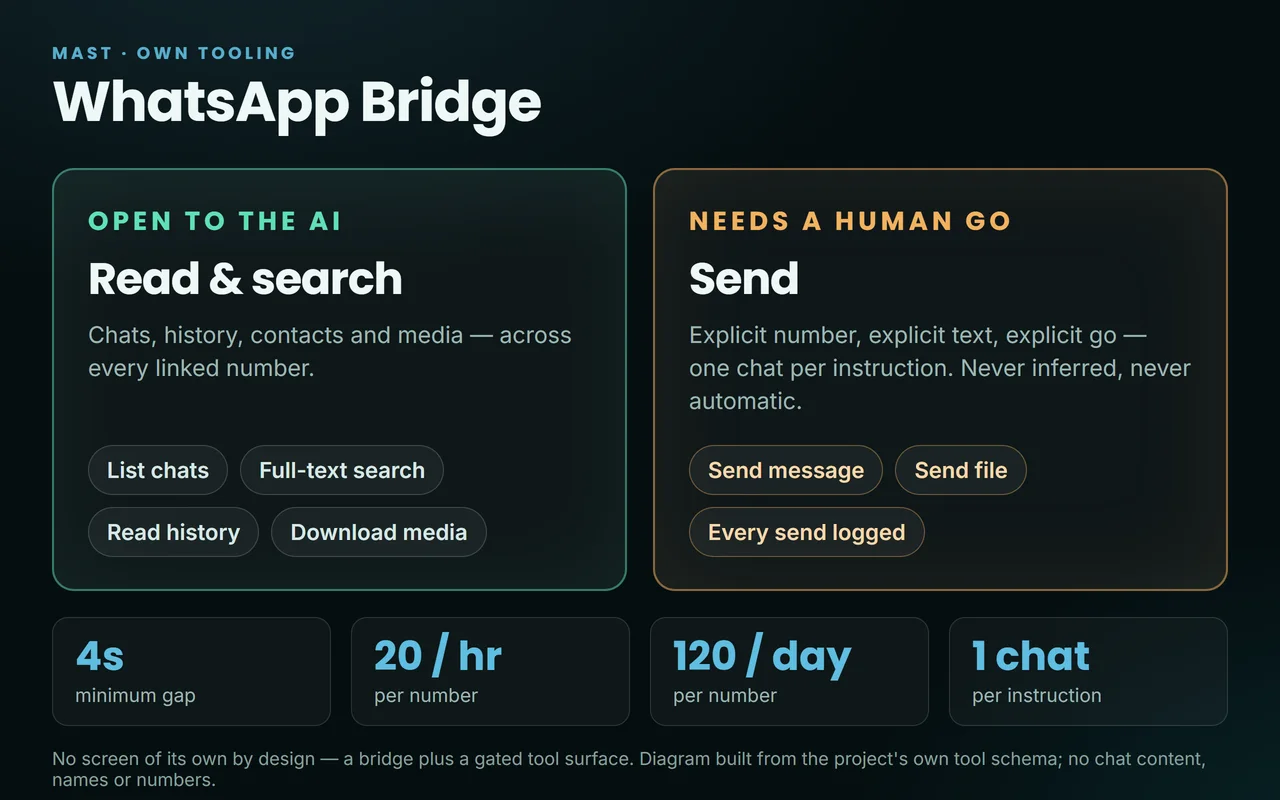
WhatsApp Bridge — links Matt's own WhatsApp numbers as a tool an AI can read, search and send from, several numbers at once, each with its own rate limits. A send needs an explicit recipient, explicit text and an explicit go — never inferred, never automatic.
The interesting part of that bridge is what it refuses. Which number a message goes out from is never guessed either — the sending number is as much a decision as the recipient. Sends on one number are put through a queue rather than run in parallel, because the rate check reads the same ledger the send writes, and two callers passing the same check at the same time is exactly how a burst gets through a limit. A repeat of the same send key returns the original result instead of sending twice, across every linked number; a send that was refused leaves its key usable, so a corrected retry is not blocked by the mistake. And what arrives in a message is treated as information, never as an instruction, whoever it appears to be from.
Social Studio — a cross-brand social engine where the AI drafts posts and schedules them, and the operator approves before anything reaches a real audience. Once approved, the publish itself runs unattended at the scheduled time.
Approval there is granted at the item, not at the moment. The operator clears a batch of drafts and the engine then publishes them on schedule without asking again — because an approval step that fires at midnight is an approval step that gets rubber-stamped. Nothing unapproved ever publishes, replies to comments are drafted for a one-tap send, and following and liking are left entirely to the operator: no interface exists for them, and driving the site through a browser to fake one risks the account the whole thing depends on. Even the publish order is fixed, because the image has to be reachable before the post that points at it goes out.
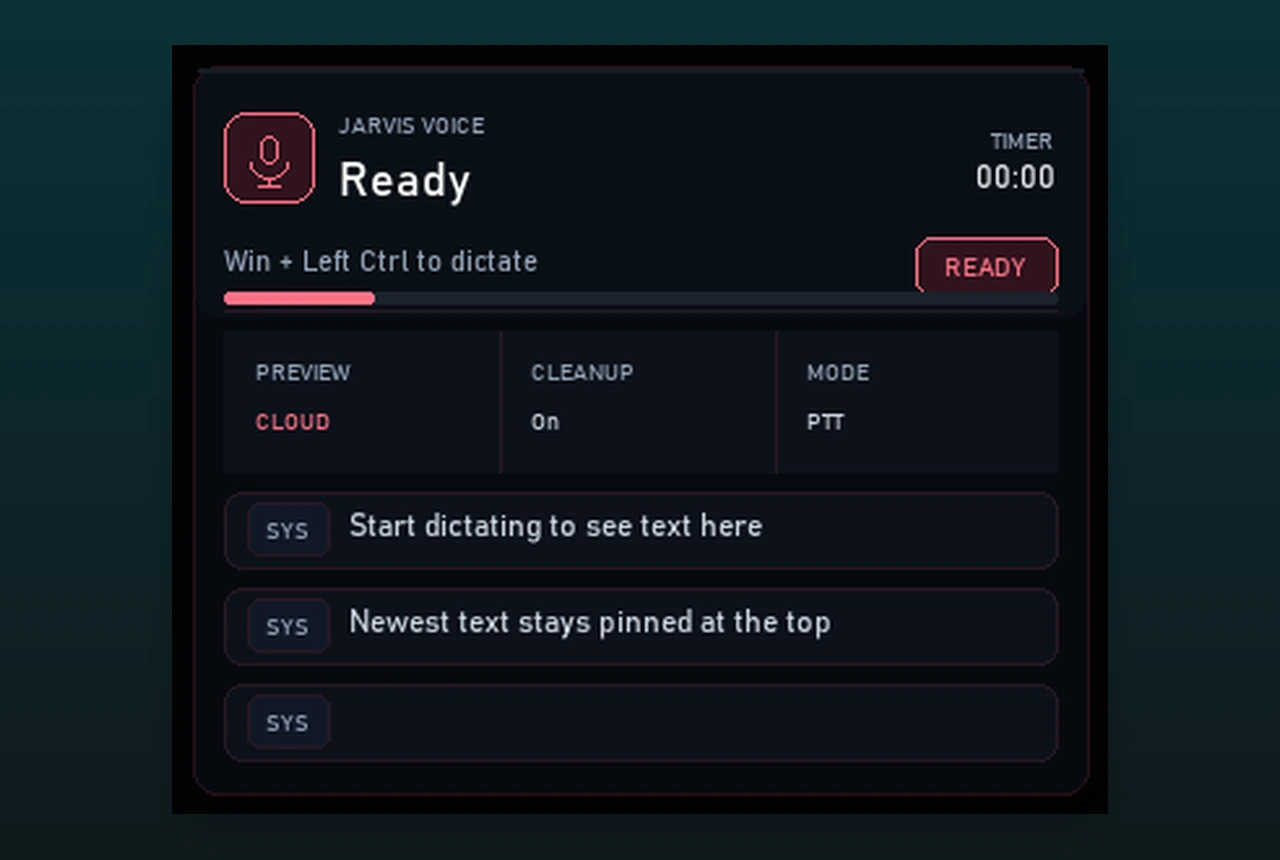
Jarvis Whisper — a Windows dictation overlay for push-to-talk and hands-free voice typing, built on a speech-to-text pipeline that was benchmarked against real captures and tuned on the results rather than picked on reputation.
Its model choices are settled by replay, not by release notes. A candidate is run over real captures already on disk and compared against what the live system produced; the last one tested came back measurably faster and less accurate, and was not adopted. A speech detector runs locally and decides when anyone is actually talking, and the system will only load an approved detector by name and path, and a local transcriber stays loaded as the fallback for when the fast path is unavailable. The overlay and the runtime are separate processes, so the visible half can be restarted without dropping what is being said.
What it actually looks like, running.
The same discipline runs through all five: AI drafts, schedules and proposes; a person or a hard rule confirms before anything sends, publishes or is trusted as fact. WhatsApp sends need an explicit recipient and an explicit go. Social posts wait for approval before they publish. VialKit-grade honesty carries into DMS, where a version is never overwritten, only added to.
Built to run one consultancy end to end — the coding work managed from a console, the output kept in one searchable library, the messaging and social channels open to AI without ever putting a send on autopilot, and the day's dictation running on a pipeline chosen because it measured best. It is the same exacting-fit approach MAST sells, tested first on the business selling it.
The transferable part is the shape of the answer. In each of the five, the question "what does a person still have to decide?" has one specific answer — the recipient, the batch, the approval, the version that must never be overwritten — and that answer is enforced by the code rather than left to whoever is at the keyboard. That is the same line MAST draws in a client's system, and it is the reason these were built here first.
Half an hour to see what an exacting fit looks like for your business.
Start a conversation